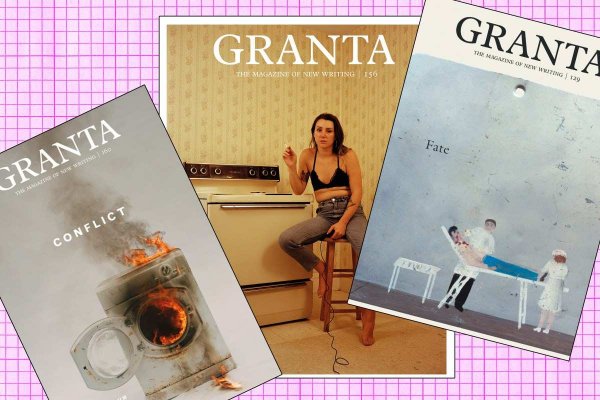
Caribbean Prize Story Sparks AI Authorship Debate at Granta
The literary world is grappling with a new controversy after a short story that won a regional prize in the Commonwealth Short Story Prize was published online and immediately accused of being written by artificial intelligence. The story, titled “The Serpent in the Grove,” appeared on the website of Granta magazine on Saturday, following its selection as the winner for the Caribbean region. The judges, who attributed the work to a writer named Jamir Nazir, praised its “precise yet richly evocative language.”
Within hours, readers began pointing out stylistic oddities that they said were characteristic of AI-generated prose. Ethan Mollick, an associate professor at Wharton who studies the impact of AI on education, posted on social media that the story appeared to be machine-written. He noted that Pangram, an AI detector, flagged the text as 100 percent AI-generated. While the reliability of such detectors is often questioned, Pangram claims a 99 percent accuracy rate with a very low false positive rate.
Social media users quickly joined in, mocking the story and expressing dismay over what its publication might signal about the state of literary awards. The prose contains several hallmarks often associated with AI output: negative parallelisms, lists of three, and imagery that seems vivid but fails to cohere. For instance, one line reads, “She had the kind of walking that made benches become men.” Another says, “Coins meant for rice or kerosene slid across the counter and came back white rum hot as apology.” A third passage states, “Hard living lays itself on a man like wet sacking; it never asks permission.”
These sentences, critics argue, offer an approximation of literary language without the underlying meaning that human authors typically convey. The technology behind AI, they note, generates text by statistically predicting the next word, not by understanding the content. The result, as one observer put it, is a puzzle piece that falls into place but does not complete the picture.
Author’s Background Raises Questions
Further scrutiny of the author, Nazir, added fuel to the fire. His bio describes him as a “Trinidadian writer of East Indian heritage,” but little else is available online. A LinkedIn page that appears to be his shows a pattern of praising AI. Additionally, the headshot provided on the Commonwealth Foundation website appears to have been generated by AI, according to several observers.
The response from the prize organizers and publishers did little to quell the controversy. Sigrid Rausing, the publisher of Granta, issued a statement saying that her team had consulted Anthropic’s AI chatbot Claude to ask whether the story was AI-generated. The chatbot reportedly replied that it was “almost certainly not produced unaided by a human.” This explanation baffled many in the literary community, who questioned why editors would rely on an AI to detect AI, and whether a chatbot could be trusted for such a determination.
Granta clarified that it did not select the story and that it only hosts the winners of the Commonwealth Short Story Prize on its website, not in its print edition. Razmi Farook, director-general of the Commonwealth Foundation, acknowledged the allegations in a statement but said that the judging process does not use AI checkers, calling such tools “not infallible.” She added that all shortlisted writers have personally confirmed that no AI was used, and that the foundation has verified this.
Even if the story is eventually proven to be human-written, the episode has sparked a broader debate about the quality of contemporary literary fiction and the pressures on prize committees. Some commentators joked that the prose sounded like “a literal parody of MFA lit,” while others lamented that such work could win awards and be featured in prestigious journals.
The incident also highlights the growing challenge that AI poses to the literary world, where the line between human and machine authorship is becoming increasingly blurred. As AI tools become more sophisticated, the reliance on human judgment and editorial oversight may need to be reexamined.
A short story that won the Commonwealth Foundation Prize for the Caribbean region is now at the center of a plagiarism dispute, with readers and an AI researcher alleging it was written by a machine. The publisher, Granta, has responded by consulting an AI chatbot, a move that has drawn further criticism. The controversy raises questions about the integrity of literary awards in the age of generative AI.
Leave a Comment
Comments (0)