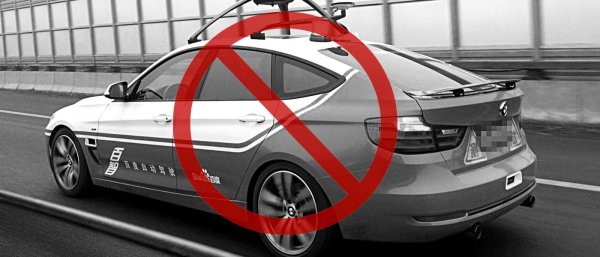
China Halts Highway Testing of Self-Driving Cars Pending New Rules
China has ordered a halt to highway testing of autonomous vehicles until formal regulations for the technology are finalized, a decision that follows a string of crashes involving Tesla's Model S and its semi-autonomous Autosteer feature, including one incident that resulted in a fatality. The suspension, effective immediately, applies to all companies developing self-driving cars and restricts testing to private facilities until the legal framework catches up with the rapid pace of innovation.
The move comes amid growing concerns about the safety of partially automated driving systems and the legal ambiguity surrounding accidents when a vehicle is under computer control. In the reported incidents, drivers using Autosteer appeared to relinquish full control of their vehicles despite explicit warnings from Tesla that the feature is in beta and requires constant driver attention. The company's website states: “Tesla requires drivers to remain engaged and aware when Autosteer is enabled. Drivers must keep their hands on the steering wheel.” However, some drivers have disregarded these instructions, leading to crashes and raising questions about liability.
China's regulatory response is designed to give lawmakers time to draft comprehensive rules that address the unique challenges posed by self-driving technology, including determining who is responsible in the event of an accident—the driver, the manufacturer, or the software developer. By banning highway testing, authorities aim to prevent further incidents while the legal groundwork is laid.
Global Regulatory Push
China is not alone in grappling with the implications of autonomous vehicles. In Germany, lawmakers are reportedly considering legislation that would require self-driving cars to be equipped with “black boxes”—data recording devices similar to those used in aviation—to help reconstruct events in the aftermath of a crash. Such devices could provide crucial evidence for accident investigations and liability determinations.
For automakers and tech companies developing autonomous driving systems, the suspension in China represents a significant operational constraint. Testing on public highways is considered essential for gathering real-world data on how vehicles perform in varied traffic conditions. With that avenue closed, companies must now rely on closed-course testing, which may slow the development and refinement of their systems.
The ban also highlights a broader tension between innovation and safety. While autonomous vehicles promise to reduce human error—a factor in the majority of traffic accidents—the technology is not yet foolproof. The recent Tesla crashes underscore the risks of premature deployment, particularly when drivers overtrust the system's capabilities.
Industry observers note that regulations have historically lagged behind technological advancements, and the current situation is no exception. By pressing pause, China is signaling that safety and legal clarity take precedence over speed to market. Whether other countries will follow suit remains to be seen, but the global conversation around autonomous vehicle regulation is clearly intensifying.
For now, companies with autonomous vehicle programs in China must adapt their testing protocols to comply with the new restrictions. The suspension is expected to remain in effect until the government issues formal guidelines, a timeline that has not been publicly specified.
China has suspended highway testing of autonomous vehicles until comprehensive regulations are established, following a series of Tesla Model S crashes involving its Autosteer feature, one of which was fatal. The move aims to give lawmakers time to address liability and safety concerns. Other nations, including Germany, are also considering new rules for self-driving technology.
Leave a Comment
Comments (0)