Astronomers Puzzled by Stars That Vanish and Reappear Over Decades
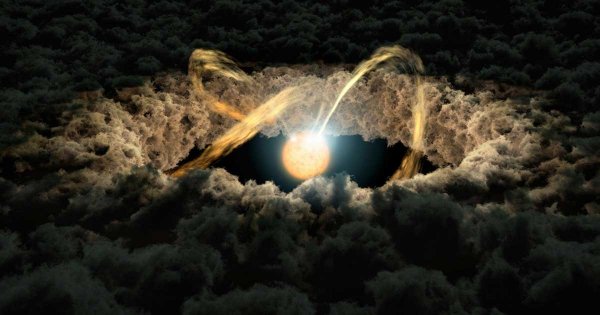
For decades, astronomers have assumed that stars end their lives in one of two ways: a gradual fade into a white dwarf or a violent supernova explosion. But a new study reveals a third, more mysterious possibility: some stars seem to vanish from the night sky without a trace, only to reappear years later. The finding, published Thursday in The Astronomical Journal, has researchers considering two explanations—one rooted in conventional astrophysics, the other far more speculative.
The study is part of the "Vanishing and Appearing Sources during a Century of Observations" (VASCO) project, an international effort to compare historical sky surveys with modern observations. By examining photographic plates and digital images dating back to the 1950s, the team identified roughly 100 red objects that have blinked in and out of existence over the past 70 years. These objects are not typical variable stars, which change brightness in predictable cycles; instead, they appear to disappear entirely and then return, defying current stellar models.
What Could Cause the Blinking?
Lead author Martín López Corredoira, an astrophysicist at the Instituto de Astrofísica de Canarias, said in a press release that the team has found no direct evidence linking these objects to extraterrestrial intelligence. However, the study's abstract leaves the door open, noting that the implications of finding vanishing and appearing sources "extend from traditional astrophysics fields to the more exotic searches for evidence of technologically advanced civilizations."
One possibility is that these objects represent a previously unknown stage of stellar evolution—perhaps a brief, dramatic dimming that has not been observed before. Another, more controversial idea is that they could be artificial structures or megastructures built by an advanced alien civilization, which might block starlight as they orbit or move. The authors are careful to state that this is only a hypothesis, not a conclusion.
A 70-Year Puzzle
The VASCO project's strength lies in its long baseline. By comparing sky photographs from the mid-20th century with current surveys, researchers can spot objects that have changed dramatically over human timescales. The 100 red objects identified so far are just the first batch; the team plans to analyze more data to determine whether these events are rare or more common than previously thought.
The study has already sparked interest in the scientific community, with some experts calling for follow-up observations to rule out mundane explanations, such as dust clouds or instrumental artifacts. Others see it as a reminder that the universe still holds surprises, even in well-studied areas of astronomy.
For now, the blinking red lights remain an enigma. Whether they are a new cosmic phenomenon or a sign of something else, the VASCO team's work highlights the value of looking at old data with fresh eyes.
A new study in The Astronomical Journal reports the discovery of about 100 red objects that have blinked in and out of existence over 70 years. Researchers say the phenomenon could represent a new astrophysical process or, conceivably, signs of advanced alien technology. The team stresses there is no direct evidence of extraterrestrial intelligence.
Leave a Comment
Comments (0)