NTU's Humanoid Robots Greet Visitors, Recall Names, and Mirror Gestures
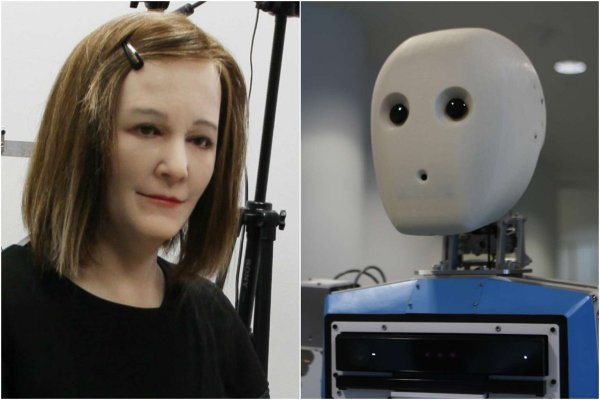
At the reception of Singapore's Nanyang Technological University (NTU), a friendly woman greets visitors by name, recalling prior conversations. But she is not human—she is Nadine, a humanoid robot designed to engage socially, with a personality and mood that shift with the dialogue. Developed under the direction of Prof. Nadia Thalmann, who heads NTU's Institute for Media Innovation, Nadine was modeled after her creator, featuring lifelike skin, flowing brunette hair, and direct eye contact during interactions.
Nadine's intelligence runs on software akin to Apple's Siri or Microsoft's Cortana, enabling her to recognize individuals she has met and remember the content of past discussions. This capability positions her as a testbed for social companionship, where memory and personalization are central to user experience. The robot's presence at the university's reception area offers a glimpse into how such machines might function in public-facing roles, from customer service to eldercare.
Alongside Nadine, NTU showcases EDGAR, a telepresence robot engineered to project the gestures and facial expressions of a remote human user. EDGAR's face is a rear-projection screen, and his arms are highly articulated, allowing for nuanced upper-body movement. A user stands before a specialized webcam, and EDGAR replicates their motions in real time, transmitting the user's face and expressions. This setup enables remote presence with a physical embodiment, which could be valuable for virtual meetings, remote assistance, or even delivering speeches.
Autonomous Interaction and Scripted Delivery
EDGAR can also operate autonomously, following a script to deliver speeches. Equipped with an integrated webcam, he tracks people he encounters and engages them in conversation, offering informative and witty replies. The development of EDGAR was led by Assoc. Prof. Gerald Seet from the School of Mechanical & Aerospace Engineering, in collaboration with the BeingThere Centre at NTU. This initiative underscores the university's focus on advancing telepresence and social robotics, aiming to bridge physical distances while maintaining human-like interaction.
These robots represent a step toward more integrated human-robot interaction, where machines not only perform tasks but also adapt to social cues and remember personal details. For NTU, the deployment of Nadine and EDGAR serves as both a research platform and a practical demonstration of how robots could be embedded in everyday environments. As the technology matures, the potential applications range from reception duties to therapy and education, though the current implementations remain experimental.
The presence of such robots raises questions about the future of human-robot relationships, particularly regarding privacy, memory, and the nature of companionship. While Nadine's ability to recall conversations may enhance user engagement, it also prompts considerations about data storage and consent. EDGAR's telepresence capabilities, meanwhile, could transform remote collaboration, but the fidelity of movement and expression is still being refined. NTU's work contributes to a growing body of research that seeks to make robots more socially aware, though widespread adoption remains a future prospect.
At Singapore's Nanyang Technological University, visitors may encounter Nadine, a humanoid robot that remembers faces and past chats, and EDGAR, a telepresence robot that mimics remote users' gestures. Developed by NTU researchers, these machines showcase advances in social AI and human-robot interaction.
Leave a Comment
Comments (0)