France's Pioneering Solar Roadway Falls Short of Expectations
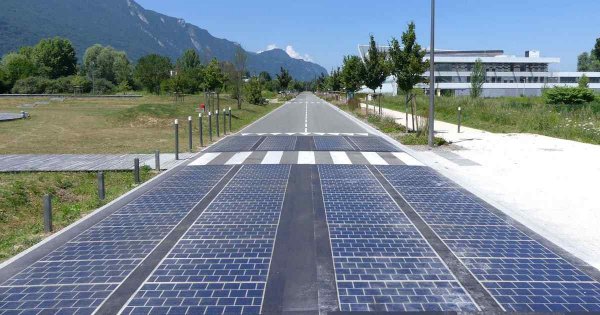
In 2016, France installed a one-kilometer stretch of solar panels on a roadway, marking a world first. Nearly three years later, the experiment has not lived up to its promise, according to a report by French newspaper Le Monde.
The photovoltaic panels, covering 2,800 square meters (about 30,000 square feet), have deteriorated significantly. The panels have begun peeling off the road and splintering, as reported by Le Monde. The road's speed limit was reduced to 70 km/h (43 mph) due to noise caused by rotting leaves on the damaged surface.
Energy production also fell short. The panels were expected to generate 790 kilowatt-hours per day, but at best, they produced only half of that amount. The project's difficulties may have been foreseeable, as 75 percent of the panels were broken before installation in 2016, according to the Daily Caller.
Global Context
Despite this setback, the concept of solar roadways is not abandoned. In the Netherlands, a solar bike lane has exceeded energy production expectations, and a solar panel road is being tested near Amsterdam's Schiphol airport. American company Solar Roadways is developing smart highways with solar panels, sensors, and LED lights for traffic warnings, which could potentially heat roads to clear ice and snow, though costs remain high.
The French project's outcome serves as a cautionary tale for infrastructure innovation, highlighting the need for robust materials and realistic performance assessments. While the idea of harnessing solar energy from roads remains attractive, the technical and economic challenges are significant, as demonstrated by this early experiment.
France's first solar road, installed in 2016, has deteriorated significantly and produces only half of its expected energy. The project's failure highlights challenges for solar infrastructure, though other countries continue to explore similar technologies.
Leave a Comment
Comments (0)